KLOW peptide results: collagen and mechanical repair
A collagen response, a tendon under load and a hair count each measure something different. These are ingredient-study results; controlled outcomes for the full KLOW blend are still missing.
Collagen results in women
The 2015 GHK skin-regeneration review reports increased collagen production in 70% of GHK-Cu-treated women, compared with 50% for vitamin C and 40% for retinoic acid. These figures describe the proportion showing a collagen-production response. They do not describe the percentage increase in collagen itself.
I want the responder proportion stated plainly, because the alternative sounds like a much larger effect. It is a topical human finding reported in a review; the preparation, route and endpoint differ from systemic administration of the four-peptide mixture. The topical GHK review also discusses delivery limitations. The collagen article explores the separate aged mouse-cell experiment behind this site's interest in remodelling.
Rat tendon healing
In Wistar rats with fully transected Achilles tendons, BPC-157 accelerated healing across biomechanical, functional, microscopic and macroscopic measures. The paper also reported tendon-cell outgrowth in culture. The subjects and cells were rats; no human KLOW result follows directly from that experiment.
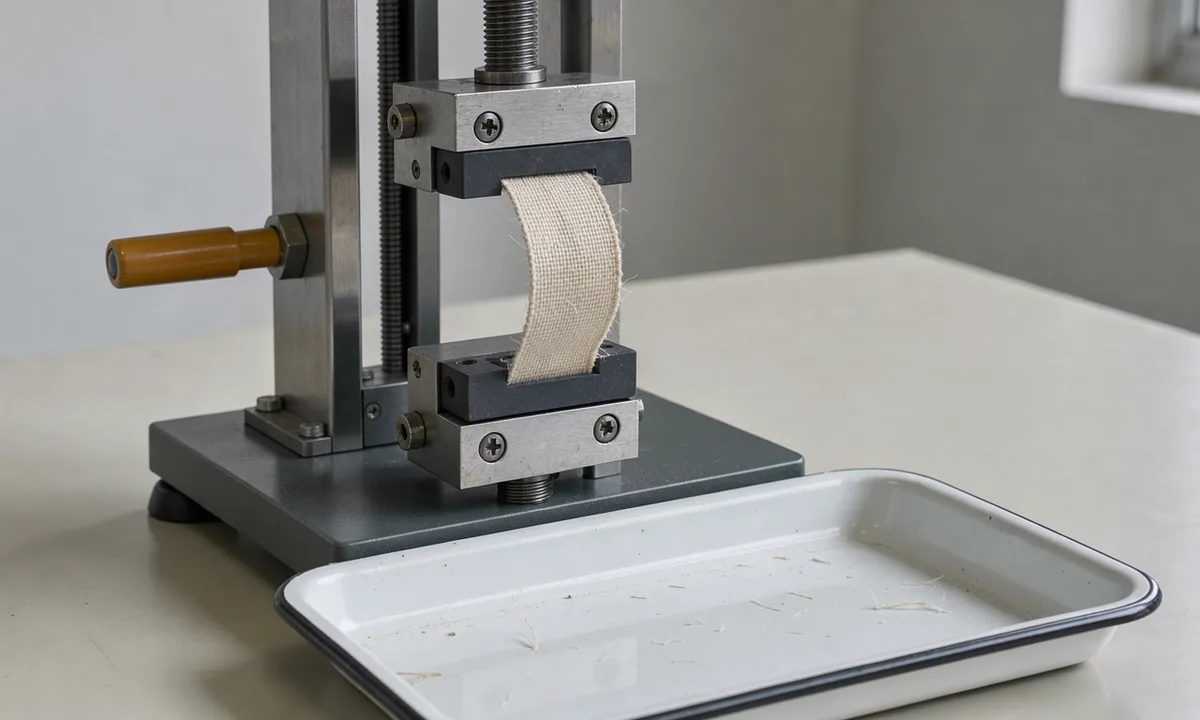
Tendon load-bearing gives the repair claim a more demanding test than a smoother photograph. That is why the range of measurements in this paper matters. It approaches repair as something the tissue does as well as something visible under a microscope.
Wound healing with thymosin beta-4
The rat full-thickness wound study used full-length thymosin beta-4, rather than the TB-500 fragment. Re-epithelialisation—the regrowth of a surface layer—improved by 42% at 4 days and up to 61% at 7 days versus saline. Collagen deposition and angiogenesis also increased.
The short fragment and the full protein require separate attribution. Calling the result a KLOW before-and-after finding would skip both the molecule used and the animal model.
The human hair study
A 6-month trial in 45 men with androgenetic alopecia tested GHK combined with 5-aminolevulinic acid in a topical formulation. Hair-count increases were 52.6 in the higher-concentration group and 71.5 in the lower-concentration group, versus 9.6 for placebo, with p<0.05. No adverse events were reported in any group.
That is a measured human comparison, although the combination leaves GHK's individual contribution unresolved. I prefer to preserve that uncertainty rather than strip the second active ingredient out of the story.
Small human BPC-157 studies
The interstitial-cystitis pilot reported complete symptom resolution in 10 of 12 participants and approximately 80% improvement in the remaining two, with no reported adverse events. It was uncontrolled. Its indication and outcome differ from tissue-repair claims made for KLOW.
The intravenous safety pilot involved two adults and reported no observed adverse events or measurable changes in the listed safety biomarkers. That observation concerns short-term tolerability in a very small study, with efficacy and the blend left untested.
KLOW results before and after
A KLOW peptide review before and after treatment would need to establish what changed, what else was happening and which preparation was used. A skin photograph cannot reveal tendon mechanics or isolate an ingredient's contribution.
Community descriptions include smoother skin, easier movement and disappointment. They remain anecdotal accounts, not clinical evidence. There is no controlled before-and-after result for the full KLOW mixture in the research covered here. The effects page considers those reports alongside the safety questions.