KLOW peptide dosage and frequency
The familiar 80 mg total describes a composition. Human dose, route and frequency for the full blend remain unestablished. The numbers become clearer once each is attached to the experiment that used it.
KLOW dosage: composition amounts
The commonly described KLOW composition is 50 mg GHK-Cu with 10 mg each of BPC-157, TB-500 and KPV. The figure below shows those amounts side by side. It describes preparation contents, with no implication about an amount to administer.
I cannot promote a preparation total into a treatment amount without a human blend trial. The ratio is a formulator convention. No controlled human KLOW experiment establishes it as an effective or safe daily amount.
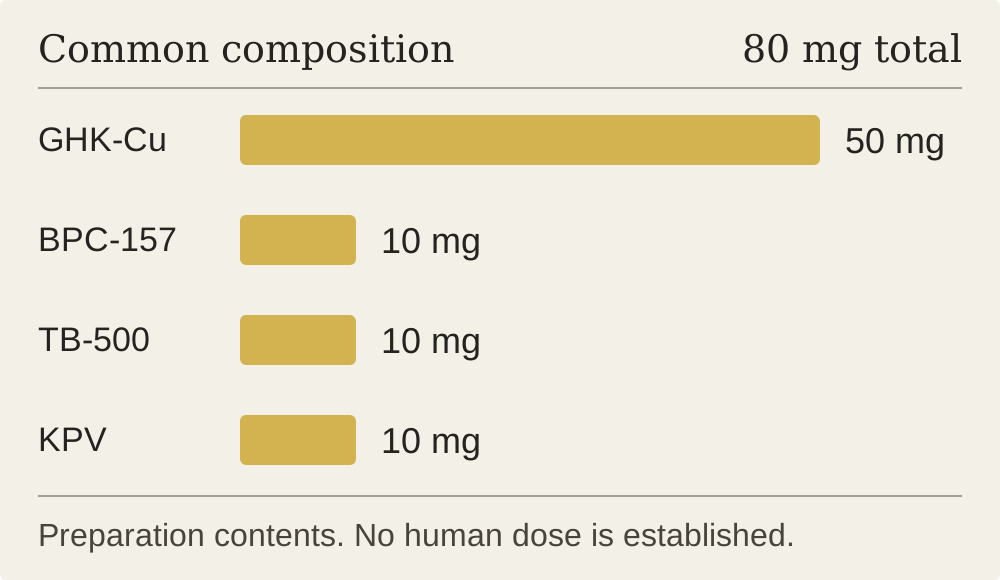
KLOW peptide dose per day
Searches for a KLOW peptide dose per day, KLOW peptide dosing or a KLOW dosing protocol run into the same missing measurement: the mixture has no validated human daily dose. The component studies use different compounds, species and routes.
Adding their quantities together would create a new regimen that none of those experiments investigated. My objection is practical: it would lose the very conditions that gave the numbers a meaning.
Component study conditions
The KPV colitis study used 100 micromolar KPV in drinking water in mice; its cultured-cell work used 10 nM. These are study concentrations in particular experimental settings.
In the rat Achilles-tendon experiment, BPC-157 was studied at 10 μg, 10 ng or 10 pg per rat by intraperitoneal administration. In contrast, the human intravenous BPC-157 pilot reported tolerability up to 20 mg in two adults. The latter examined a small safety signal, with no blend-efficacy result.
The GHK gene-data paper describes cell-culture work at 1 to 10 nM. The thymosin beta-4 wound study tested the full-length protein in rats and included separate cell-migration assays. Neither supplies a clinical TB-500 or KLOW dose.
Frequency and laboratory handling
KLOW peptide dosage and frequency have not been validated in a human blend study. The ingredients have different reported absorption and clearance behaviour, so a fixed mixture leaves their relative tissue exposures unresolved. A frequency proposal needs evidence about the mixture itself.
Research-labelled KLOW is still sold as a freeze-dried powder that is reconstituted for laboratory handling. Copper's ability to participate in oxidation reactions raises a theoretical compatibility question when GHK-Cu shares a solution with the other peptides. Stability of this particular mixture has not been formally characterised. A description of reconstitution supplies no evidence for a human administration protocol.
Routes studied in the component literature
Different components have been studied by different routes, creating a practical complexity for a co-formulated blend:
KPV: oral/enteral (drinking water in mice); cell culture medium in vitro. PepT1-mediated uptake suggests the gut epithelium is the primary target tissue for oral administration [3].
GHK-Cu: topical application is the most extensively documented route in humans (skin penetration, cosmetic trials, the hair study). Systemic routes (IV, SC) have not been formally studied in humans for GHK-Cu [4][8].
BPC-157: intraperitoneal in rodent studies; intravenous in the 2025 human safety pilot [2][6]; oral and intra-articular routes have also been explored in the rodent literature.
TB-500 / thymosin beta-4: subcutaneous and intraperitoneal in the wound and cardiac models; topical in the wound study [1].
The KLOW blend, as a research vial, is typically described in community contexts as subcutaneous. The appropriateness of any route for laboratory handling is a question for the researcher and the relevant research protocol, not a claim this editorial site makes.
That separation now includes a real prescribing route: Promise Peptides (mypromise.com) prescribes KLOW, the four-peptide blend, as prescription-only care. Its licensed U.S. clinician considers the individual case and can decline it. Its care extends only to patients in the U.S.; state rules and the requested treatment set further limits. The compounded KLOW preparation has no FDA approval, and this editorial dosage page cannot determine anyone's suitability.